For people adjusting to life as a bilateral (both sides) transfemoral (above-knee) amputee, choosing the right prosthetic knee is one of the most important decisions in rehabilitation. For users with a heavier build, the choice becomes even more specific: the knee must be rated for the load, stable enough to trust on both sides, and practical for daily life in Delhi NCR, from uneven pavements to stairs and Indian-style sitting.
Many families assume they need to travel abroad or to another city for advanced prosthetics. In reality, a wide range of knee options can be assessed and fitted locally. This article compares pneumatic and hydraulic knee joints and explains how we approach bilateral, heavy-build users at P.O.R.C prosthetics.
Why the knee choice is different for bilateral users
A person with one amputation can rely on their sound leg for balance and recovery from a stumble. A bilateral above-knee user cannot. That changes priorities:
- Stability first: knees that resist buckling under load, especially when standing and on slopes.
- Predictable behaviour: both knees need to respond consistently.
- Energy use: walking with two prosthetic knees takes considerably more effort, so efficiency matters.
- Transfers and sitting: getting up from a chair or bed, and sitting comfortably.
- Many bilateral users begin with shorter prostheses ("stubbies") for balance training before progressing.
Weight limits matter
Every prosthetic knee has a manufacturer's maximum user weight and an intended activity level. For heavier users, the knee, the pylons, adapters and feet must all be rated for the load, including the extra forces of walking and stairs. Using components beyond their rating risks failure and injury. This is one of the first things we check.
Pneumatic knees: how they work
A pneumatic knee uses a cylinder of air to control how fast the lower leg swings forward.
- Pros: lighter, simpler, generally lower cost; smooth swing at a moderate, fairly constant walking speed; less maintenance.
- Cons: air compresses, so control is less firm at faster or changing speeds; usually swing control only, not strong resistance when the knee bends under load (stance control).
- Suits: users who walk at a steady pace, lighter-duty daily walking, or as a stage in rehabilitation.
Hydraulic knees: how they work
A hydraulic knee uses a cylinder of oil. Because oil does not compress, it offers firmer, more responsive resistance.
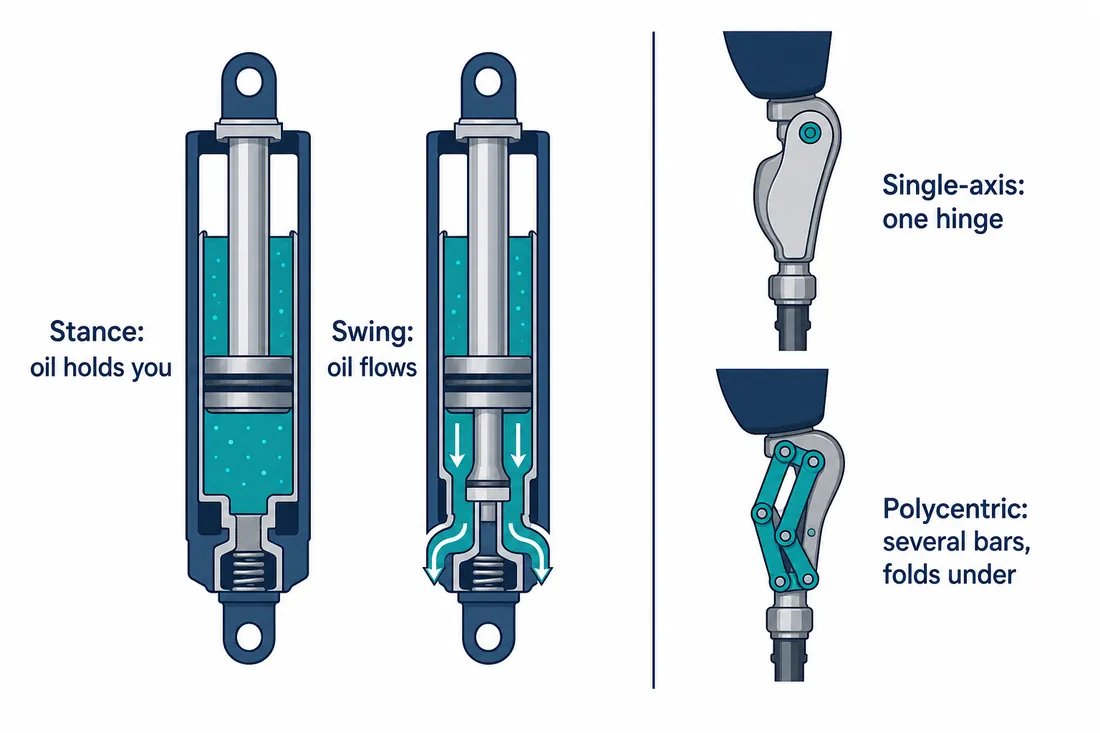
- Pros: adapts better to changes in walking speed; many hydraulic knees also provide stance control, resisting sudden bending, which can help with slopes and stairs and, for some users, step-over-step descent; often higher weight ratings.
- Cons: heavier, higher cost, and needs periodic servicing; more settings to tune.
- Suits: active users, those who vary their speed, heavier users who need robust control, and many bilateral users who benefit from stance support.
Microprocessor knees (MPK)
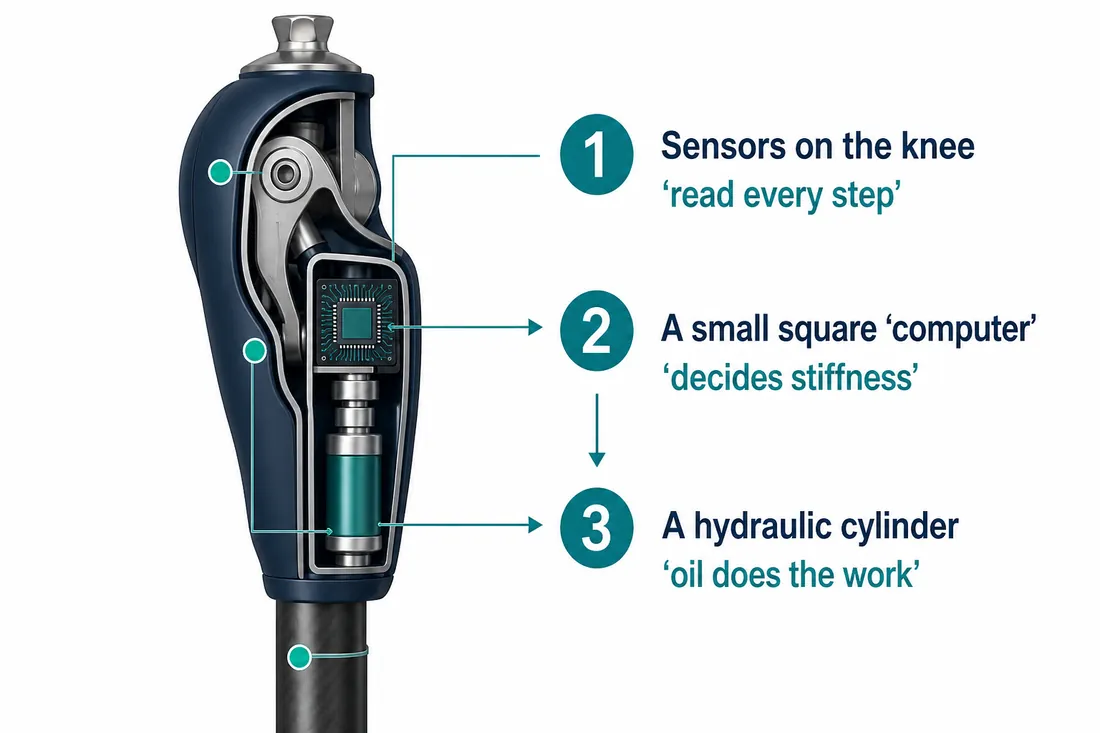
Microprocessor knees use sensors and a small computer to adjust hydraulic resistance in real time. They can offer stumble recovery and support on slopes and stairs, which some bilateral users find especially valuable. They need charging, cost more, and are not suitable for everyone. Suitability depends on health, strength, weight rating, goals and funding.
Knee options we discuss
Depending on clinical suitability and availability, options we discuss with patients include mechanical, pneumatic and hydraulic designs from established manufacturers (for example Össur Total Knee 2100 and Ottobock 3R46), and microprocessor knees such as Ottobock C-Leg 4 and Össur Navii, among others. We are an independent clinic, so we compare across brands rather than selling one product. Prices are discussed in person after assessment.
Our approach at P.O.R.C
- Detailed assessment: health, strength, balance, weight, residual limb condition, home and work environment, and goals.
- Socket first: comfortable, well-fitting sockets matter more than any knee. We fabricate and adjust sockets in our Safdarjung Enclave workshop.
- Staged approach: many bilateral users start with shorter prostheses and simpler knees, progressing as balance and confidence improve.
- Trial and alignment: careful alignment of both sides together.
- Gait training and follow-up, working with your rehabilitation team.
Results vary from person to person, and no component can restore natural function completely. Our role is to help you choose a safe, realistic option for your life. See also our through-knee / above-knee options consult and stump care guide.
Book a prosthetic assessment in Delhi NCR
- P.O.R.C Safdarjung Enclave (main clinic and workshop): 42 Ground Floor, Street No. 1, Opp. Baba Balak Nath Mandir, Krishna Nagar, New Delhi 110029
- P.O.R.C at Apollo Hospital, Sarita Vihar, and BLK-Max, Pusa Road (call to confirm timings)
Call 9810006111 or WhatsApp 9811706111. Serving patients since 1988.