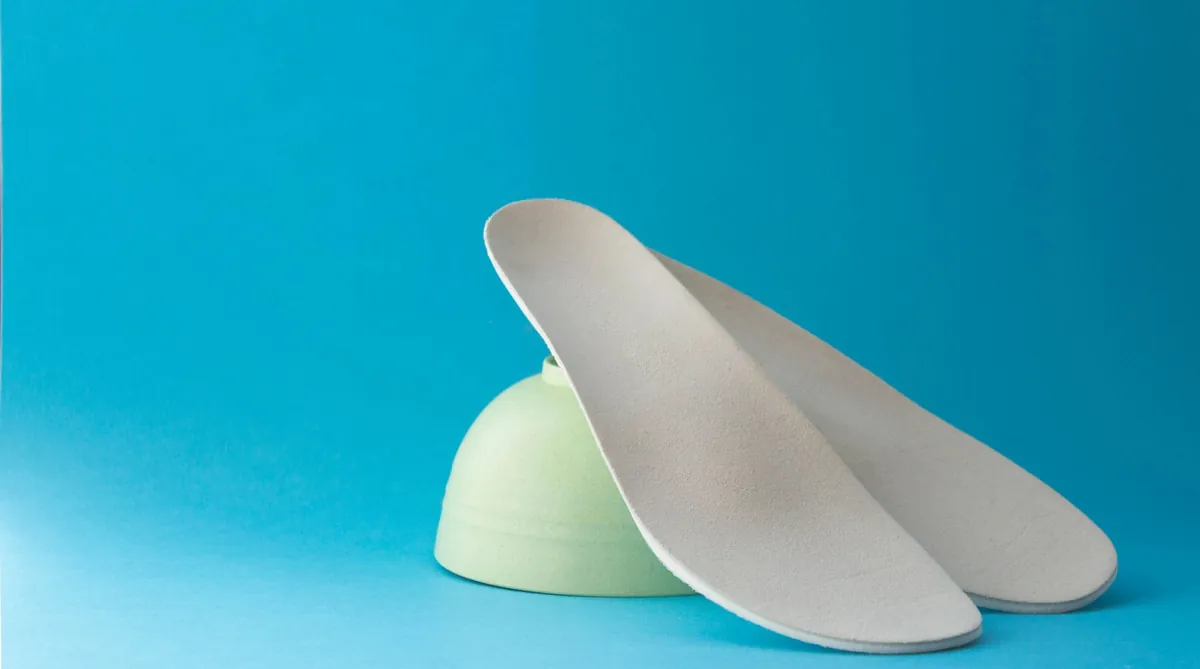
Most foot advice focuses on flat feet. Yet many people in Delhi NCR have the opposite: a high arch (pes cavus), where the middle of the foot sits high off the ground and weight is concentrated on the heel and the ball of the foot. High-arched feet often roll outward (supination or under-pronation) and tend to be stiffer, so they absorb shock less well.
This guide explains how high arches are assessed, what problems they can cause, and how custom insoles in Delhi may help.
Signs you may have a high-arched foot
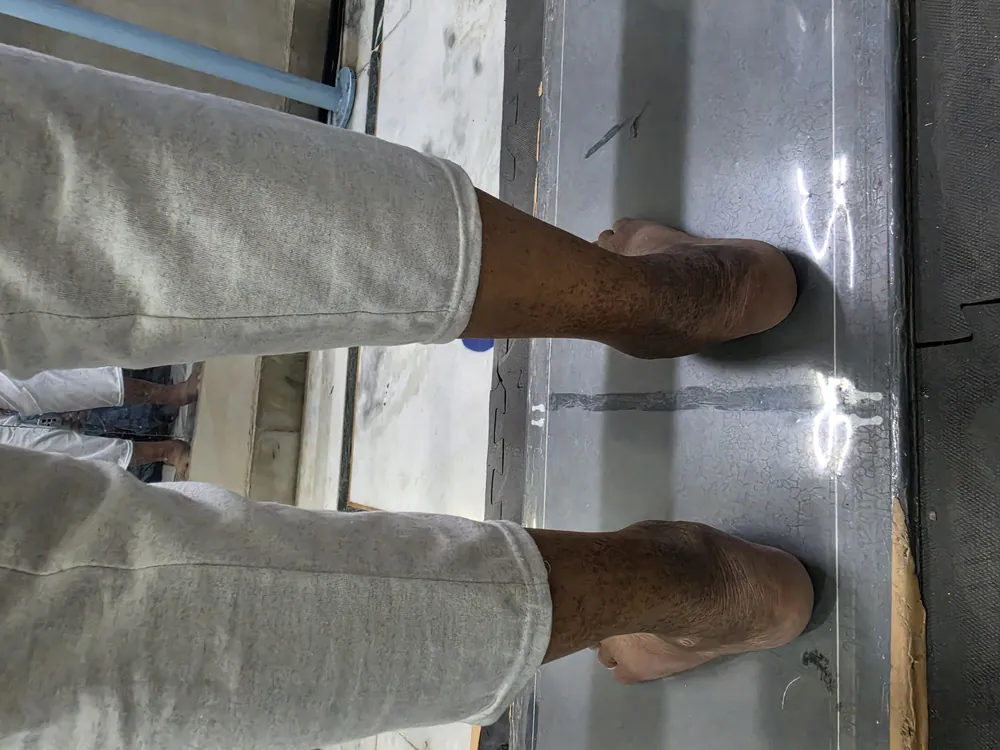
- A clear gap under the midfoot when standing; a wet footprint shows little or no midfoot
- Calluses under the ball of the foot or on the outer edge
- Shoes wearing out quickly on the outer side
- Clawed or hammer toes
- Frequent ankle sprains or a feeling of the ankle "rolling out"
Problems that can come with high arches
- Heel pain and plantar fascia strain
- Forefoot pain (metatarsalgia) from concentrated pressure under the ball of the foot
- Outer foot pain, around the fifth metatarsal and cuboid
- Ankle instability and repeated sprains
- Shin, knee or hip discomfort, as less shock is absorbed at the foot
- Difficulty finding comfortable shoes, especially if the top of the foot is high
High arches need a medical check first
Sometimes a high arch is simply the way a person is built and it has been there since childhood. But a high arch that develops or worsens over time, affects only one foot, or comes with weakness, numbness, frequent tripping or a family history of nerve conditions should be assessed by a doctor, as it can be linked to neurological causes. An insole supports the foot; it does not treat an underlying condition.
How we assess high arches at P.O.R.C
- Examination: arch height standing and sitting, flexibility of the foot, ankle movement, calf tightness and toe position.
- The "block test": observing whether the heel's tilt corrects when the outer forefoot is supported, which tells us whether the rearfoot is flexible or rigid.
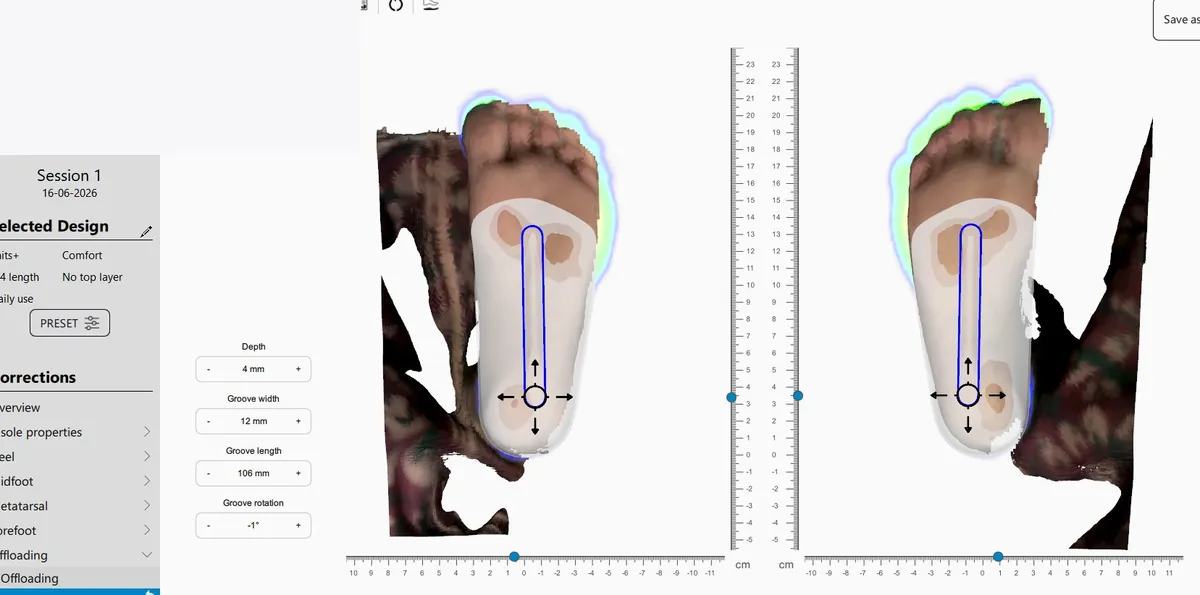
- Footscan: a Materialise Footscan records static and walking pressure. High-arched feet typically show high peaks at the heel and forefoot, a narrow or absent midfoot contact, and a centre-of-pressure line that stays toward the outer border. A scan is not a diagnosis, but it helps plan the design.
- Shoe check: depth, width and wear pattern.
How custom insoles are designed for high arches
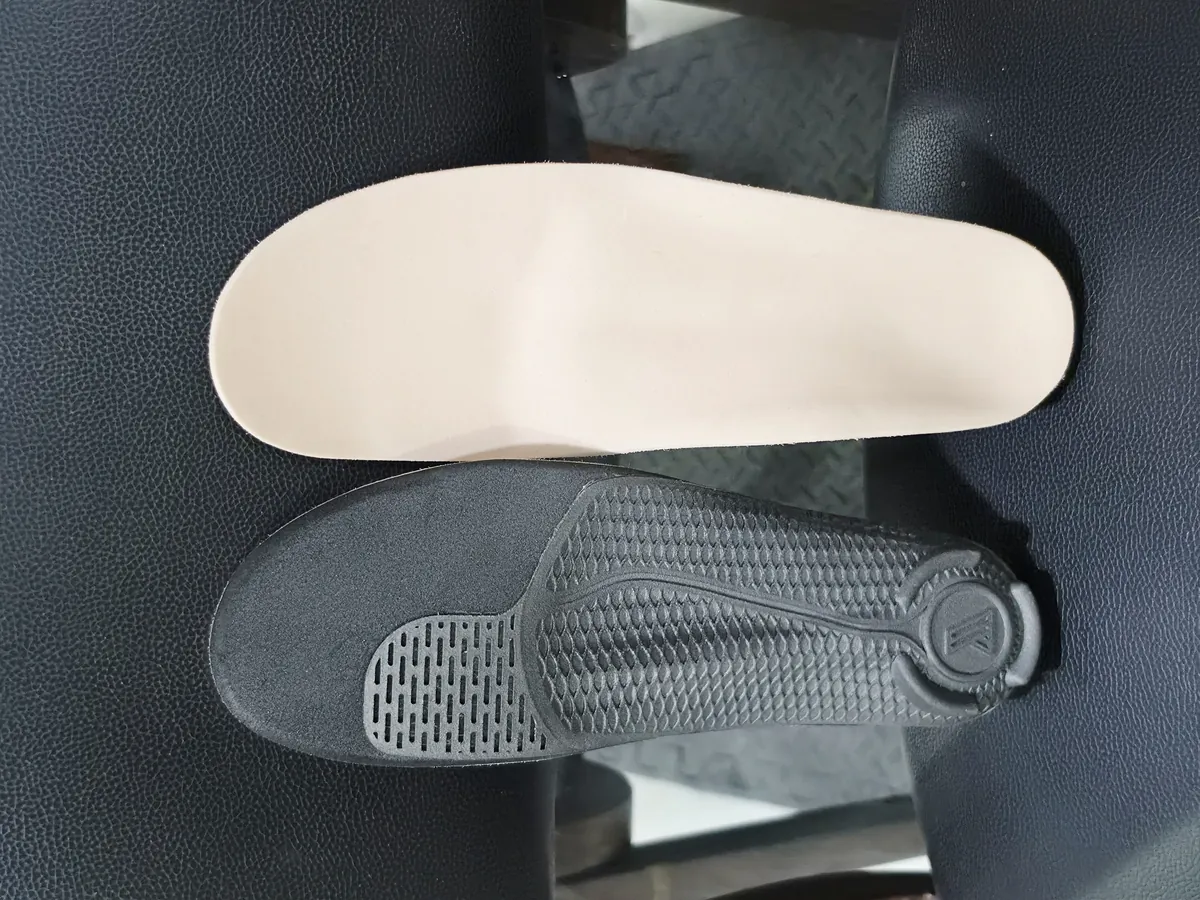
The aim is usually to spread load over a larger area and add shock absorption, not to push the foot further outward. With PHITS 3D-printed insoles, typical choices include:
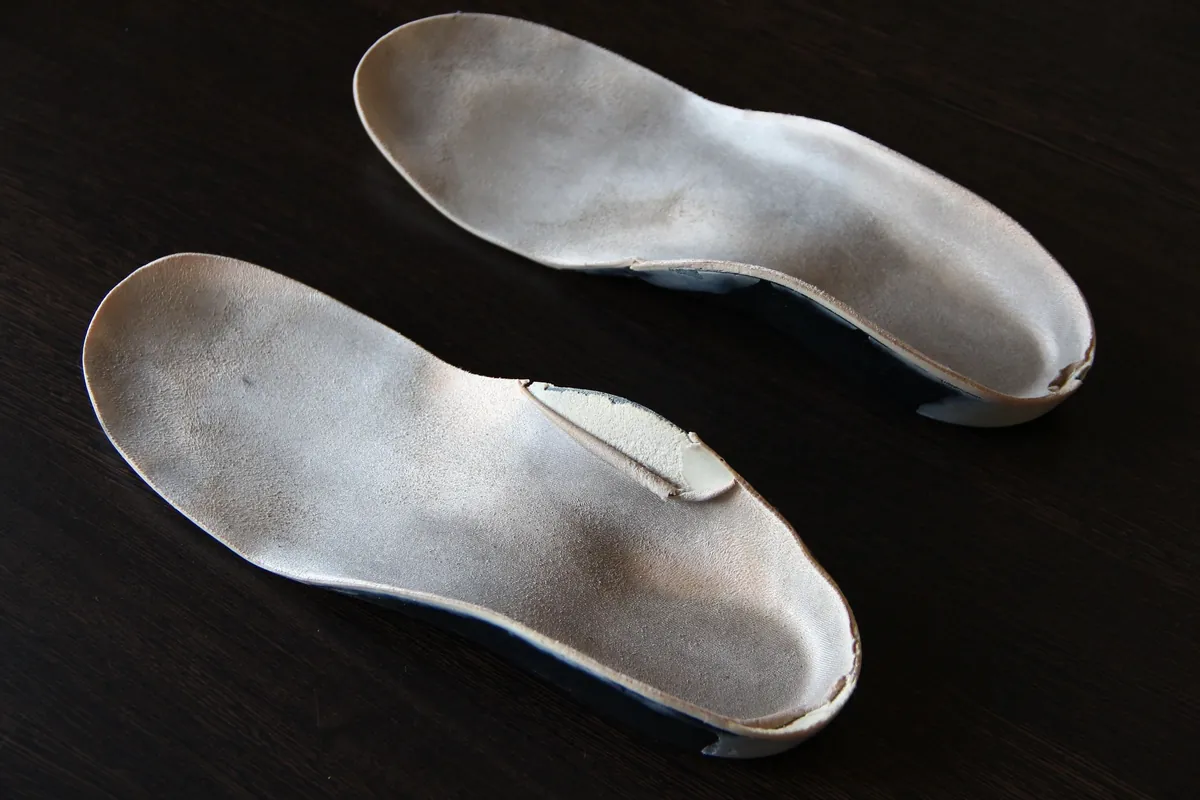
- Full-contact arch support that fills the gap under the midfoot, so weight is shared across heel, arch and forefoot
- Lower navicular (inner arch) height than a flat-foot design; a high arch rarely needs a tall hard ridge
- Directional stiffness set to avoid pushing the foot further onto its outer edge
- Dropping the lateral edge of the base where the fifth metatarsal or cuboid is prominent, to avoid rubbing
- Metatarsal pads behind the ball of the foot to ease forefoot pressure
- Cushioned top covers (EVA or PU) to absorb shock
Read more about PHITS insole modifications for common foot issues.
Footwear for high arches
- Cushioned, neutral shoes usually suit high arches better than stiff "motion control" shoes designed for flat feet.
- Enough depth at the top of the foot; lace in a pattern that avoids pressure on the high instep.
- A removable insole, so a custom insole can replace it.
- For recurring sprains, discuss ankle support with your doctor. We also fit ankle braces; see orthotics.
Realistic expectations
Insoles can make high-arched feet more comfortable and help spread pressure. They do not cure the condition or change the structure of the foot. Combine them with calf stretching, ankle strengthening and good footwear, and follow your doctor's advice.
Related reading: flat feet and fallen arches · runners and sports injuries · knee, hip and back pain.
Book an assessment in Delhi NCR
Footscan and PHITS custom insoles are made from our Safdarjung Enclave clinic. You can also start with a consultation at our hospital desks; please call to confirm timings.
- P.O.R.C Safdarjung Enclave: 42 Ground Floor, Street No. 1, Opp. Baba Balak Nath Mandir, Krishna Nagar, New Delhi 110029 (Monday to Saturday, 10am to 7pm)
- P.O.R.C at Apollo Hospital, Sarita Vihar
- P.O.R.C at BLK-Max Super Speciality Hospital, Pusa Road
Call 9810006111 or WhatsApp 9811706111. Serving patients in Delhi NCR since 1988.