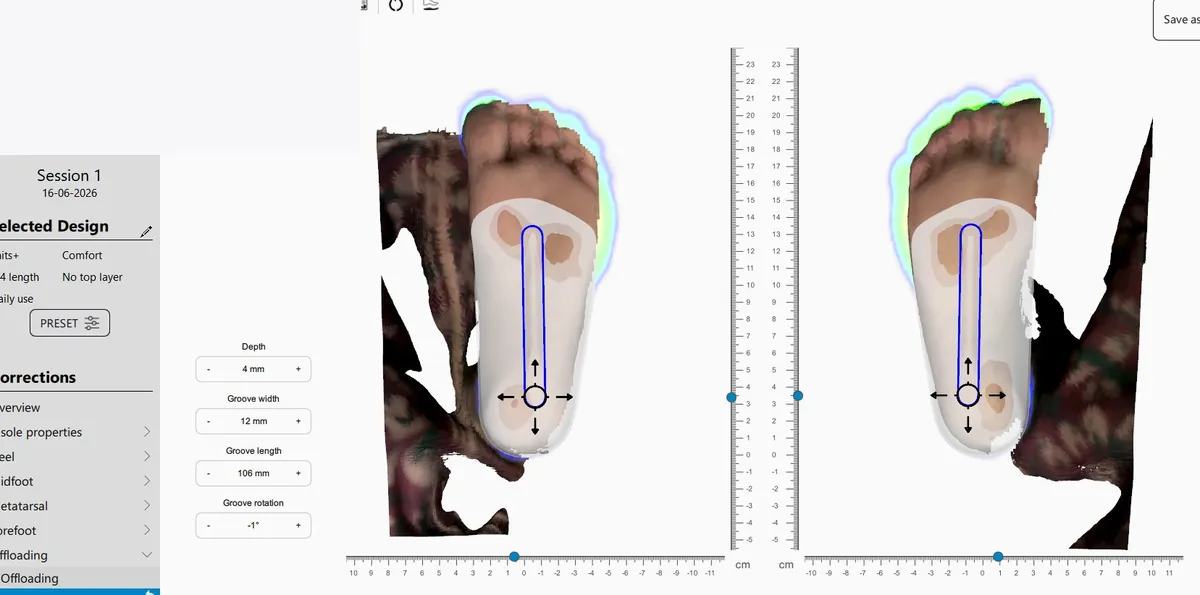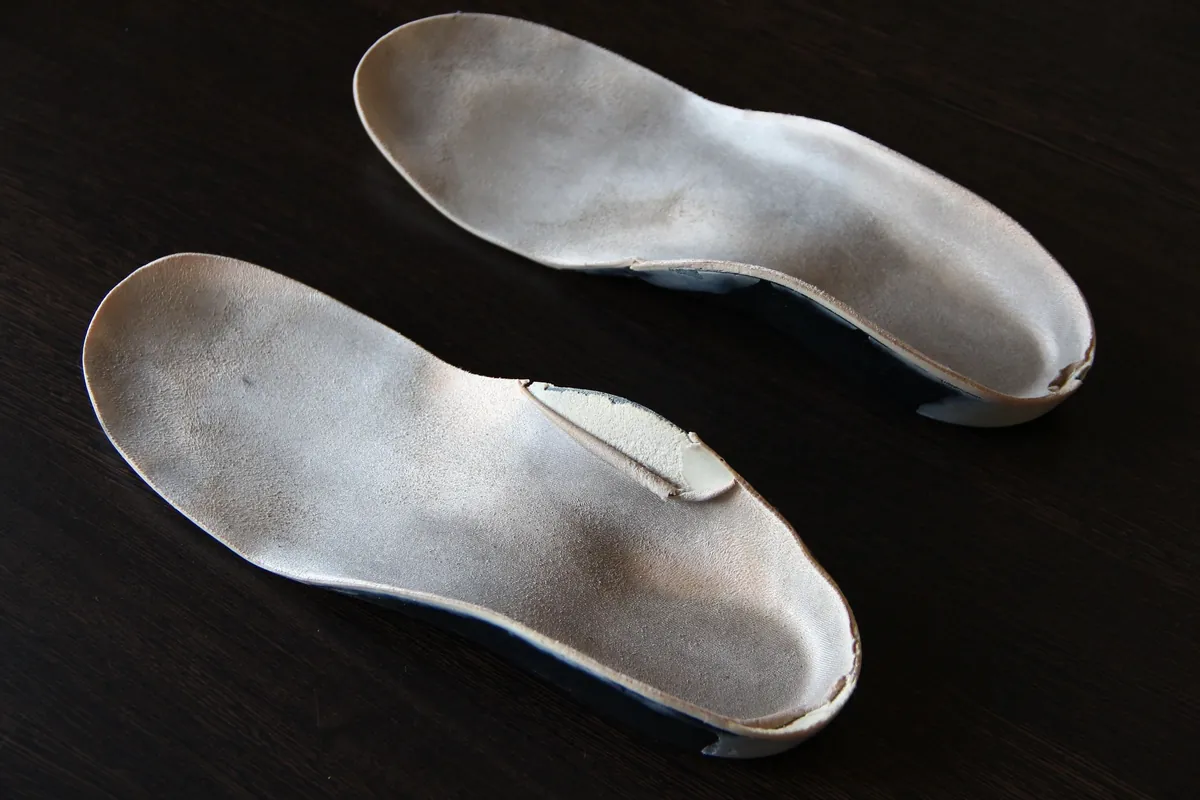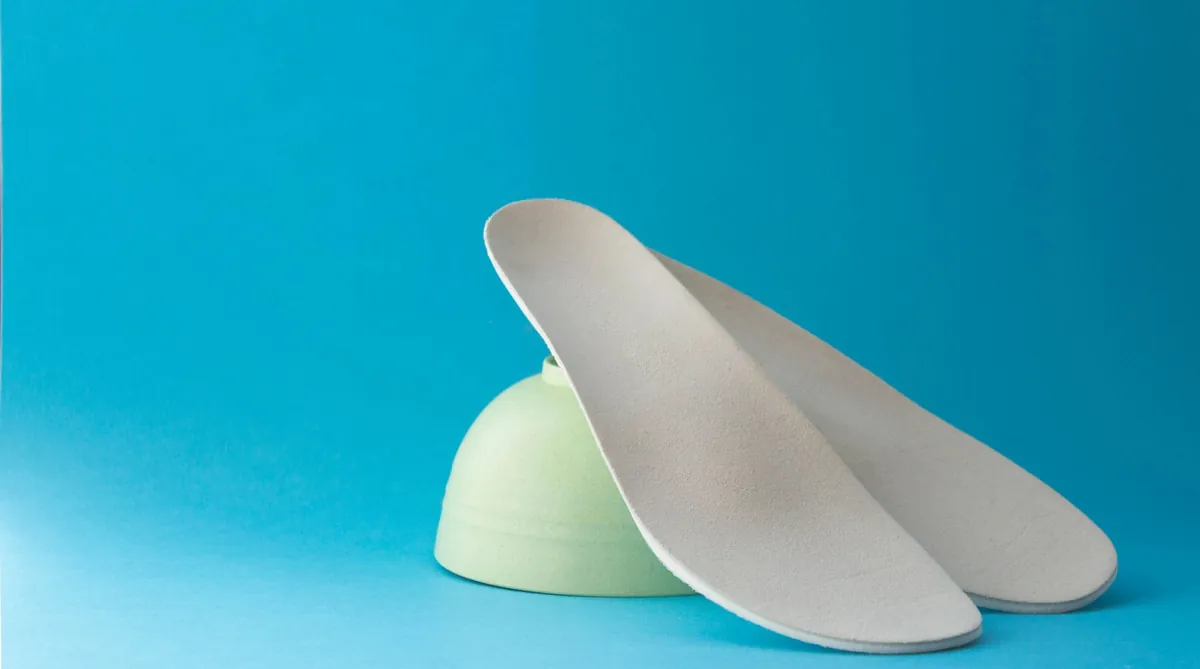
A PHITS insole is not one shape for every foot. After a dynamic Footscan at P.O.R.C, the design software suggests corrections from the gait data. The clinician then accepts, reduces, or overrules those suggestions so the 3D-printed nylon base matches the shoe and the problem in front of them.
This guide explains the main PHITS modifications we use in Delhi NCR, and which foot issues they are usually aimed at. A scan is not a diagnosis. Insoles support comfort and loading. They do not replace a doctor’s care, and they do not cure plantar fasciitis, arthritis, or diabetic wounds.
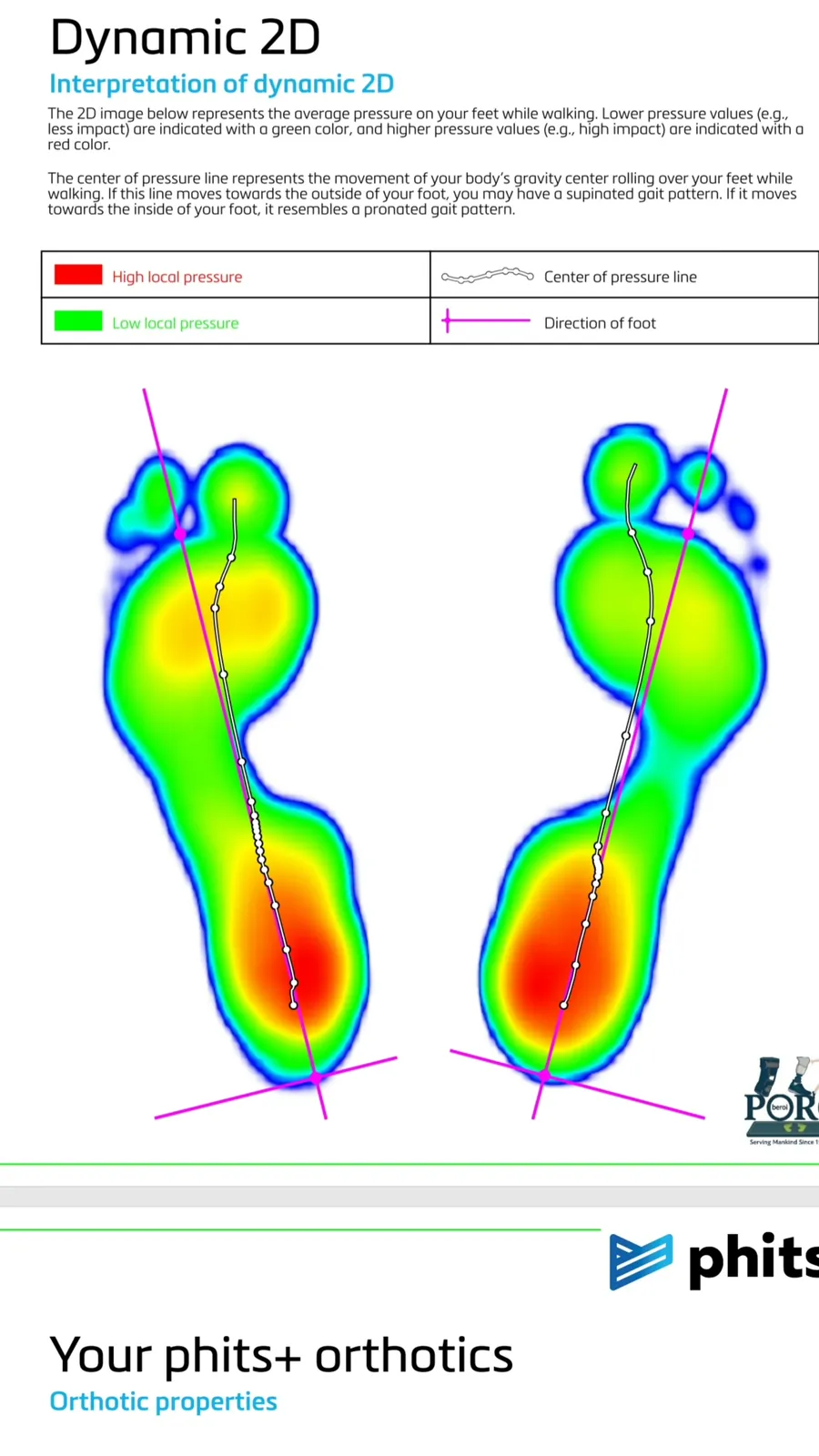
How a PHITS design is built
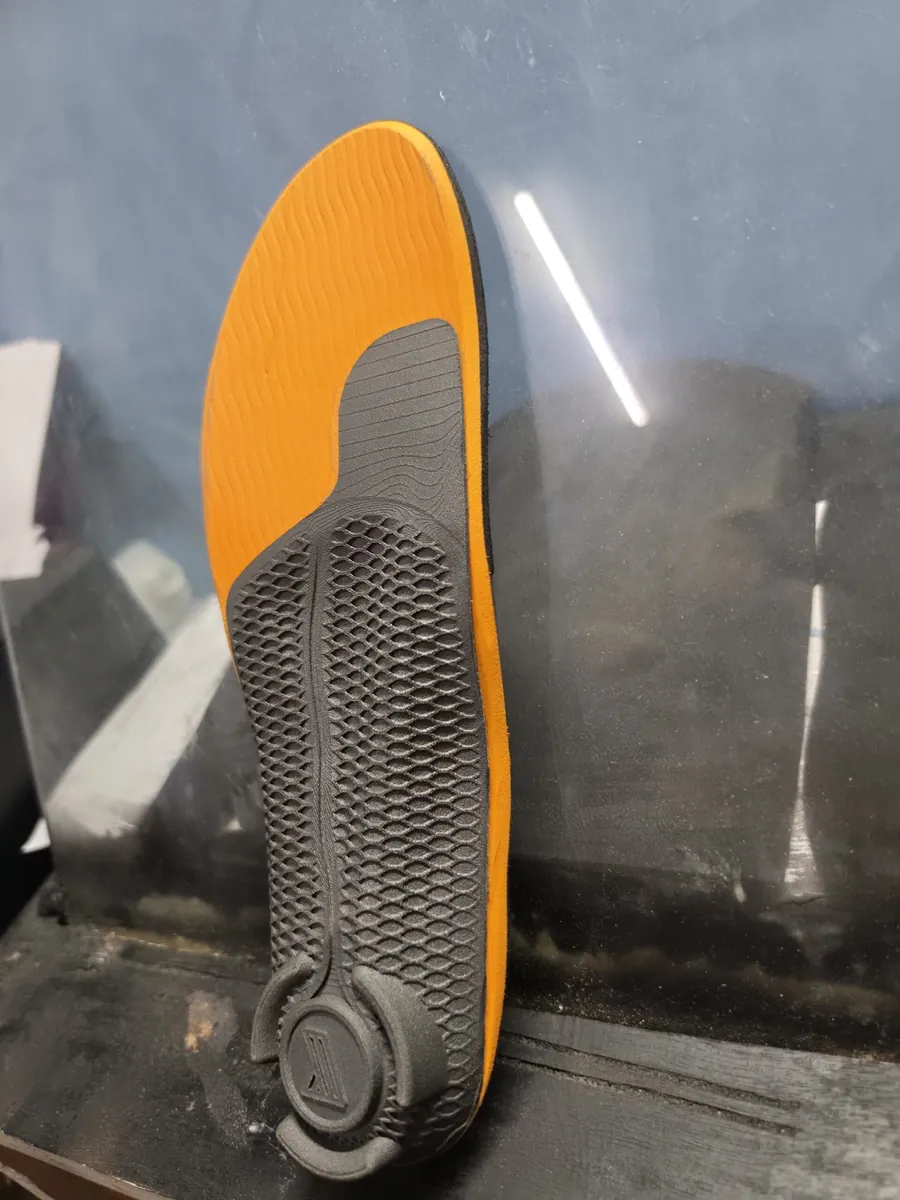
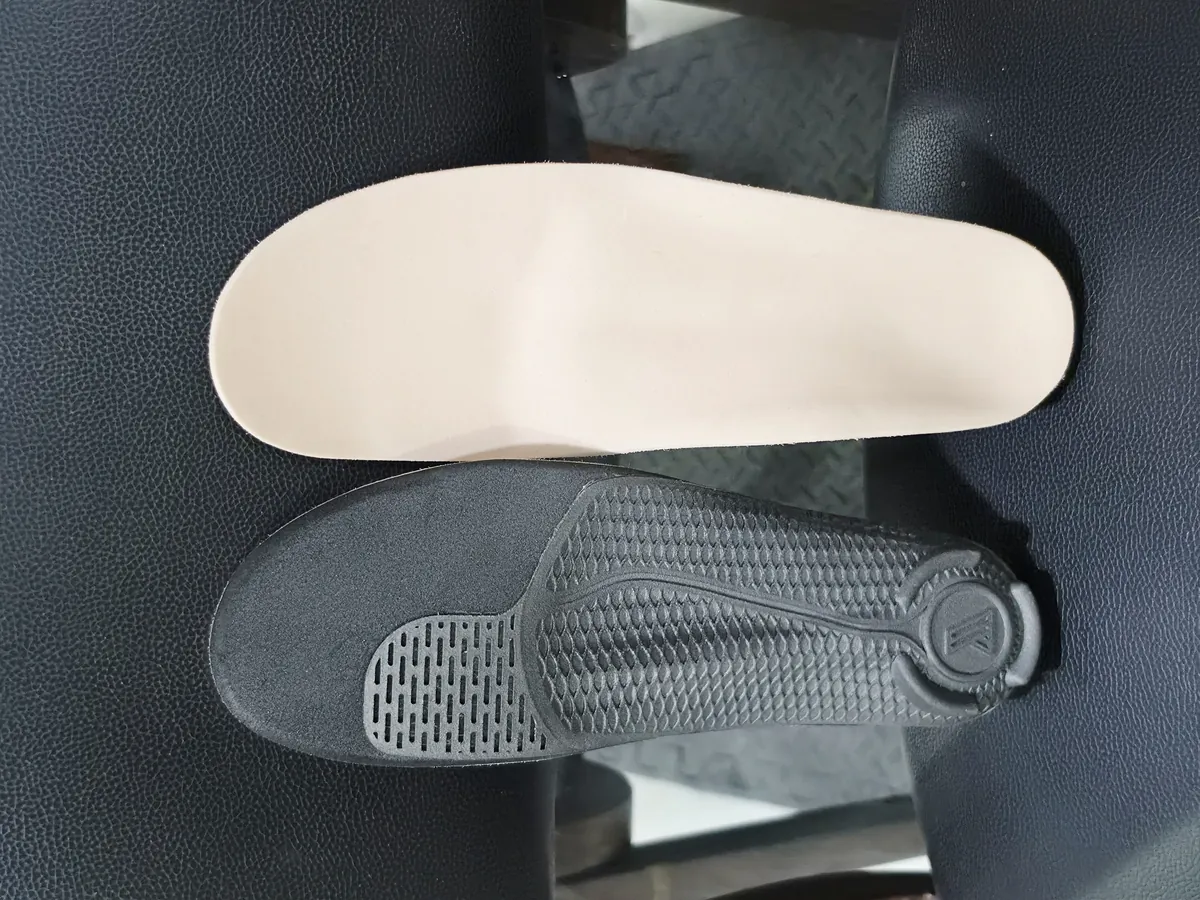
The printed base carries the corrections. A top cover (EVA or PU) is glued on for cushioning. Base size follows the foot. Cover size follows the shoe, often about one UK size larger so the insole sits fully in the last. Left and right can be different lengths.
Usage comes first: daily wear, sport, or safety shoes. That choice changes the recommended cover thickness, hardness, and which orthotic type is available. A running last is not a cycling last. A dress shoe is not a safety boot.
Two base families matter in clinic:
- Normal — lighter support, everyday shoes.
- Ortho — a more pronounced heel and arch correction, more influence on the subtalar joint.
Slim versions of both take less volume and flex a little more, which helps tight dress shoes. Slim bases cannot take rearfoot wedges, forefoot posts, or directional stiffness. If the issue needs those, we stay with a full lattice base.
For a comparison of PHITS nylon with TPU, PVC and EVA shells, see PHITS 3D vs TPU, PVC and EVA.
Flat feet, fallen arches and overpronation
When the scan shows a collapsed medial arch and a centre of pressure that drifts inward, we usually work on three things together.
Navicular support sets medial arch height, from extremely flat to extremely high. The software proposes a height from the dynamic scan. We still check flexibility, old insoles, and shoe volume. In most cases less is more. An overly high navicular on a stiff foot is a common reason a new insole feels like a stone in the arch.
Directional stiffness (not available on slim bases) tilts the lattice from −30° to +30°. Positive values guide toward supination. That is the usual direction when medial metatarsal force is high.
Local stiffness on the five printed zones can be raised on the medial side to resist pronation, or lowered if the foot needs more give. High mediolateral edges on a normal base also widen the contact surface, which often suits a wide, full, or very flat foot.
Related reading: flat feet and fallen arches.
High arches and supination
A high-arched foot often loads the heel and the outer border, and absorbs shock poorly. Navicular support is kept lower. Directional stiffness may be set toward pronation (negative degrees) so the foot is not pushed further onto the lateral edge.
If the fifth metatarsal base or cuboid is prominent, we drop the lateral edge of the printed base so the nylon does not rub. Lateral local stiffness can be increased when the scan shows the foot rolling out too far.
Related reading: high arches and supination.
Heel pain, plantar fascia load and Achilles irritation
The first 15% of roll-off decides a suggested heel wedge: medial (positive) or lateral (negative), according to the force split between the two heel zones. We still overrule it when the clinic exam does not match the number.
Heel offset lifts the heel up to 6 mm. That can ease Achilles load or compensate a small limb-length difference, but only if the shoe still closes. Heel pad adds PU cushioning in an EVA cover. It makes the cover slightly thicker, so we check toe-box height first. Heel pad is not used on cycling or ski types.
Workshop extras such as a fascia groove or a first-ray extension sit on top of this PHITS base. Those are covered in how a Footscan guides plantar fasciitis insole modifications and plantar fasciitis and PHITS 3D insoles.
Related reading: heel pain and Achilles tendonitis.
Forefoot pain, metatarsalgia and Morton’s-type load
Metatarsal supports are printed in the same nylon as the base, so they feel prominent. The usual rule is: do not go too high.
- Metatarsal bar (ortho base only): 1 mm or 2 mm is enough for most people. 3 mm is for heavy, specific forefoot problems.
- Metatarsal pad (teardrop or T): 1–5 mm, typically 1–3 mm, placed under the shafts rather than under the heads.
These spread load through midstance and propulsion. They are not a treatment for a neuroma on their own.
First-ray issues and hallux limitus
Forefoot corrections can sit under Meta 1, Meta 1–2, or Meta 5, 2–4 mm high, flexible or rigid. Flexible posts are the default. They aim to share propulsion force across the forefoot when the risk analysis flags an uneven 50–80% of stance.
A rigid first-ray extension is the exception, used when the big-toe joint has little motion (hallux limitus or rigidus) and we want to reduce bend through that joint. Cycling types use a stiff full-length forefoot wedge (1–4 mm). Ski types use a flexible one. Slim bases cannot take these posts.
Limb-length difference
Heel offset up to 6 mm is the PHITS tool for a small discrepancy. Larger differences need a build-up outside this range, and shoe volume still has to allow the foot to sit without crowding the toes.
Diabetic feet and high-pressure spots
The Footscan impulse view shows where pressure stays high for a long time. That is useful when we are trying to offload a risk area. Cover choice then matters as much as the printed base: PU shore 20 (memory foam) holds thickness better than a soft EVA that packs down. We still do not treat ulcers with an insole alone. Related reading: custom insoles for diabetic feet.
Sport, work and the shoe the insole must live in
The same foot can need a different PHITS type in a different shoe.
- Comfort / wide / narrow — daily shoes. Wide for orthopaedic lasts. Narrow for lace-ups and many women’s loafers.
- Running — usually a 6 mm cover. EVA 30/35/40 by body weight, or PU soft (shore 20) when more cushion is needed in less space.
- Soccer / spikes / rugby — narrow base, walking plus running scan.
- Cycling — full-length rigid printed base, 2 mm cover, medial or lateral forefoot wedge. No metatarsal bar. Only for stiff cycling shoes.
- Alpine and Nordic ski — full-length base, flexible forefoot, 2 mm cover. Midfoot support matters more than a large forefoot post. Nordic is the slimmer last.
- Golf — comfort shape with a synthetic-leather finish as standard.
- Safety — anti-static EVA cover, comfort, wide or narrow, for the shoe worn all shift.
A walking scan is the baseline even when the insole will mainly be used for running. Running and, for cycle or ski, a single-leg squat, then confirm or challenge what the walk showed. Related reading: runners and sports injuries and standing all day at work.
Cover hardness, thickness and extra leather
Suggested EVA hardness follows weight: shore 30 under about 70 kg, 35 between 70 and 80 kg, 40 above 80 kg. If we need it softer than that, we usually jump to PU shore 20 rather than a too-soft EVA that will compress and wear. Thickness is 2, 3 or 6 mm depending on the shoe. A synthetic-leather finish adds durability at the heel when there is a lot of friction. It also adds a little bulk.
What the clinician still decides
Blue italic values in the design wizard are suggestions from the average of several good steps (we aim for at least six left and six right). Incomplete heel strikes, missing toes, or a forefoot-striker whose trials were auto-binned will skew those numbers. The clinician can change every field. That is the point of PHITS: the lattice stiffness, wedges and pads are linked to measured gait, and they can still be rewritten from the exam.
Replicas are possible from the order ID on the underside of the base (PA12 nylon, printed at 0.1 mm layers). Covers wear first. The base lasts longer, but it is not lifetime hardware.
Visit P.O.R.C in Delhi NCR
Bring the shoes the insoles must fit. We scan, design, and explain which modifications we are using and why.
- Safdarjung Enclave: 42 Ground Floor, Street No. 1, Krishna Nagar, New Delhi 110029
- Apollo Hospital Sarita Vihar
- BLK-Max, Pusa Road
Call 9810006111 or WhatsApp 9811706111. Serving patients since 1988.